

About Kara Robinson Chamberlain
Kara Robinson Chamberlain is a keynote speaker, survivor advocate, former law-enforcement professional, television host, and established voice on ethics in true crime. Her work sits at the intersection of survival, criminal justice, media, and what happens after trauma.
Her perspective comes from having lived and worked on nearly every side of those spaces—as a survivor, investigator, advocate, television subject, producer, and host. Today, Kara uses that breadth of experience to empower survivors, train professionals, advise media teams, and bring more humanity and nuance to difficult stories and conversations.
Her public story began with survival. Her work is about what came after.
The Story That Started It

At 15, Kara Robinson Chamberlain was abducted at gunpoint from a friend’s front yard and held captive for 18 hours.
Throughout the ordeal, she deliberately observed details about her captor, his belongings, and her surroundings. When an opportunity came, Kara escaped. The information she provided investigators helped identify Richard Evonitz and ultimately connect him to previously unsolved crimes.
The case became widely known. But for Kara, surviving it was only the beginning.
Learning the system from the inside
Kara’s relationship with the criminal justice system did not end when her case closed.
She later completed the South Carolina Criminal Justice Academy and worked in law enforcement, including as a school resource officer and in sex-crimes and child-abuse investigation and victim advocacy.
That work gave Kara another perspective on trauma and response: what it feels like to need help, what it means to be responsible for providing it, and how profoundly the actions of professionals can affect what comes next for a survivor.
People need more than procedures. They need to be seen as whole human beings.

From being the story to shaping the story
For much of Kara’s public life, her relationship with media was straightforward: she was the person being interviewed about what happened to her.
Over time, that changed.
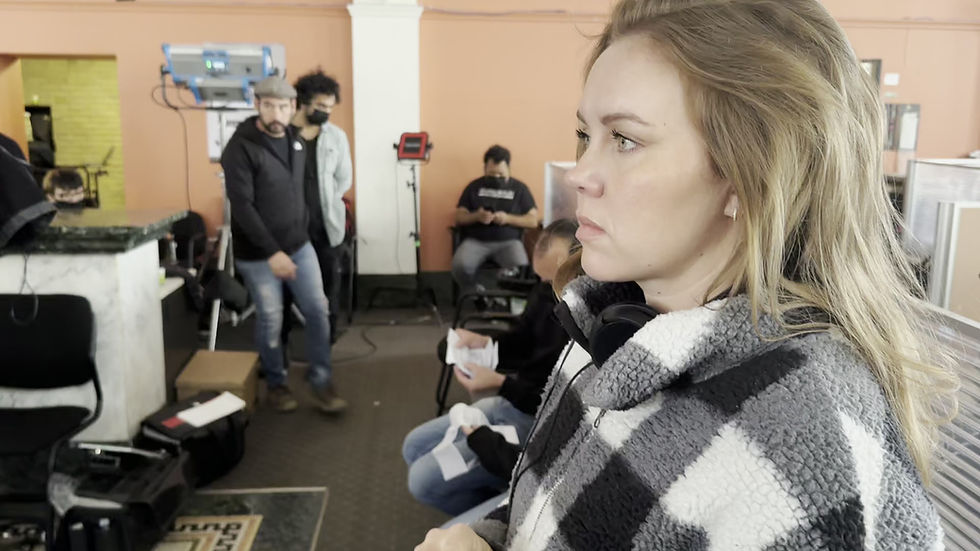
Kara became an executive producer on Oxygen’s Escaping Captivity: The Kara Robinson Story, worked on the development of Lifetime’s The Girl Who Escaped, created and hosted Survivor’s Guide to True Crime, and moved into investigative television as host and investigator of ABC News Studios’ Somebody Knows Something.
Her work continues with Investigation Discovery’s The Serial Killer Connection, a three-part docuseries in which Kara and Bonnie Lou retrace Richard Evonitz’s past, pursue unanswered questions, and investigate whether additional victims may still be waiting to be identified.
That progression has given Kara an unusually complete view of true crime—from being the person whose trauma becomes content to becoming someone actively involved in how stories are investigated, developed, and told.
The story matters. So does how we tell it.
Kara has become an established voice on ethics in true crime, training professionals and speaking about survivor participation, consent, language, victim agency, family relationships, storytelling choices, and the impact that remains after the cameras leave.
Her position is not that difficult stories should not be told.
Compelling storytelling and responsible storytelling do not have to be opposites.
The strongest work can hold complexity, preserve humanity, and recognize that the people at the center of a story continue living long after the audience moves on.
That commitment to nuance now informs Kara’s television work, training, consulting, advocacy, and the conversations she brings to the stage.
Where the work has led
Keynote Speaking
High-impact keynotes built around case study, resilience, survivor empowerment, human behavior, and how individuals and systems respond before and after crisis.
Training + Consulting
Ethics in true crime, survivor-informed storytelling, professional training, and consultation for organizations and media teams navigating difficult stories involving real people.
Television
Investigative and documentary work that brings lived experience, curiosity, and survivor-informed perspective into the storytelling process.
Survivors should be more than the subjects of other people’s stories.
Their experience can also be expertise.
Kara believes survival does not have to become an identity someone remains trapped inside. What happens to us matters. What we build from it matters too.
Her work is ultimately about expanding the story beyond the worst moment—toward agency, responsibility, growth, purpose, and the people we become afterward.